AAC Blocks

AAC Blocks (Autoclaved Aerated Concrete)

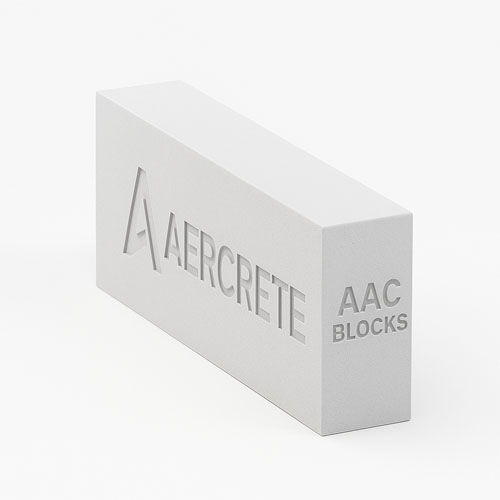
Aercrete AAC blocks represent a new era in construction materials, offering unmatched strength, lightweight design, and eco-friendliness. Manufactured using fly ash, cement, lime, and aeration agents, our autoclaved aerated concrete (AAC) blocks adhere to IS 2185 Part-3 standards, ensuring top-notch quality. These blocks are an excellent substitute for clay bricks and concrete blocks, making them a green building product that reduces carbon footprint.

Constructed from recycled materials with zero wastage, Magicrete AAC Blocks accelerate construction by up to four times compared to clay bricks due to their size, dimensional accuracy, and easy workability. Magicrete also offers a variety of AAC block sizes to meet all your walling needs, and our AAC block prices are more economical than traditional red clay bricks, providing better value with faster construction and reduced material usage.

Product

Our Products

Features

Lightweight

Lightweight

Boasts an exceptional lightweight nature, weighing only 1/3rd of red bricks. It reduces the overall structural load, resulting in cost savings of up to 15%.

Superior Strength

Superior Strength

Offers a remarkable strength of 4N/mm2, surpassing the strength of red clay bricks.

Thermal Insulation

Thermal Insulation

With a thermal rating of 0.16 W/(m·K), AAC blocks ensure 30% lower HVAC expenses, reducing heat transfer and improving indoor temperatures.

Earthquake Resistant

Earthquake Resistant

Lightweight AAC Blocks exhibit remarkable earthquake resistance, preferred in seismic zones, and proven to withstand Category 5 wind loads.

Fire Resistant

Fire Resistant

The cellular structure provides unbeatable resistance against flames, with a best-in-class fire rating of more than 4 hours.

Sound Resistant

Sound Resistant

Closed air pockets in AAC blocks yield an STC rating of 44, offering superior sound insulation for virtually soundproof interiors.

Technical Specification

PARAMETERS SPECIFICATIONS
Density 550-650 kg/m³ (Oven Dry)
Compressive Strength 4 N/mm²
Modulus of Elasticity 2040 N/mm²
Coefficient of Thermal Expansion 8.1 x 10 -6 K -1
Water Absorption 8% (at equilibrium)
Drying Shrinkage 0.04%
Thermal Conductivity 0.16 W/m²K
Fire Resistance 4 Hrs. (150mm wall)
STC Rating 43db (100mm wall)

Walling Technology Comparison

Parameters AAC Blocks Concrete Block Red Clay Brick
Eligible For Green Points Under GRIHA/IGBC Yes Yes No
Fire Rating (150 mm) 4 Hours 3 Hours 2 Hours
Thermal Conductivity 0.16 W/m²K 2 W/m²K 0.18 W/m²K
Water Absorption Low Average High
MEP Installation difficulty level Minimal Very High Medium
Earth Quake Resistance Highest in category Low Low
Speed of Installation (1 Mason + 2 Helpers) 35 m²/day 18 m²/day 10 m²/day
Dry Density 550–650 kg/m³ 2400–2500 kg/m³ 1800–2000 kg/m³
Energy Saving High Low Low
Pest and Termite None None High
Sound Reduction Index (100 mm) 43 dB 41 dB 40 dB
Material Composition Fly Ash, Gypsum, Lime, Cement, Aluminium Powder Cement + Sand + Gravel Top Soil

FAQs ACC Block

Yes, AAC Blocks are extremely safe and time tested , they are being used in construction since 1923 in Europe and in India they are being used since 1972 , Tests conducted by independent laboratories shows that AAC is not hazardous or toxic.

No,the application procedure is similar as with the conventional red/clay bricks and hence any ordinary mason can carry out the AAC block wall work with slight training. IS:6041 (for AAC Block masonry) lays down the procedure for application of AAC blocks.

Buildings built till few years back were load bearing structures, i.e. the weight of the structure was borne by the walls of the building, hence high strength was required in the wall. However, buildings constructed today are non load bearing structures, i.e. the weight of the structure is borne by the beams and the pillars and not the wall. Walls of today acts just as a partition. Therefore, AAC provides adequate amount of strength as required by the structure of today.

Yes, AAC blocks can easily bear the load of wall hung fixtures and furnitures and nails can beeasily hammered like any other clay/red brick wall.

Concealing work becomes extremely easy and fast on an AAC block wall as channels can be easily cut out on the wall using simple conventional cutting tools or machines.

AAC bock can be easily cut with simple tools like a hacksaw or a handsaw, drilling can also be easily achieved.

Yes, AAC blocks attracts and holds the plaster like any ordinary clay/brick wall. Depending on the quality of masonry work, plastering can also be ommited and even if required, a plaster thickness of not more than 10mm is recommended.

Yes, ordinary Cement-Sand joining mortar in the ratio of 1:6 can be used for joining of AAC blocks. However, for additional benefits and cost savings, it is advisable to use Powerbond Thin-bed joining mortar/adhesive designed especially for AAC Blocks. It is delivered in ready-to-mix powder form. Just 2-3 mm thin mortar bed is needed to adhere the blocks.

No, AAC has a honeycomb structure and the pores in AAC are discontinuous. This prevents any capillary action taking place in blocks and hence does not allow water to pass through it and also absorbs less water compared to traditional red/clay bricks.