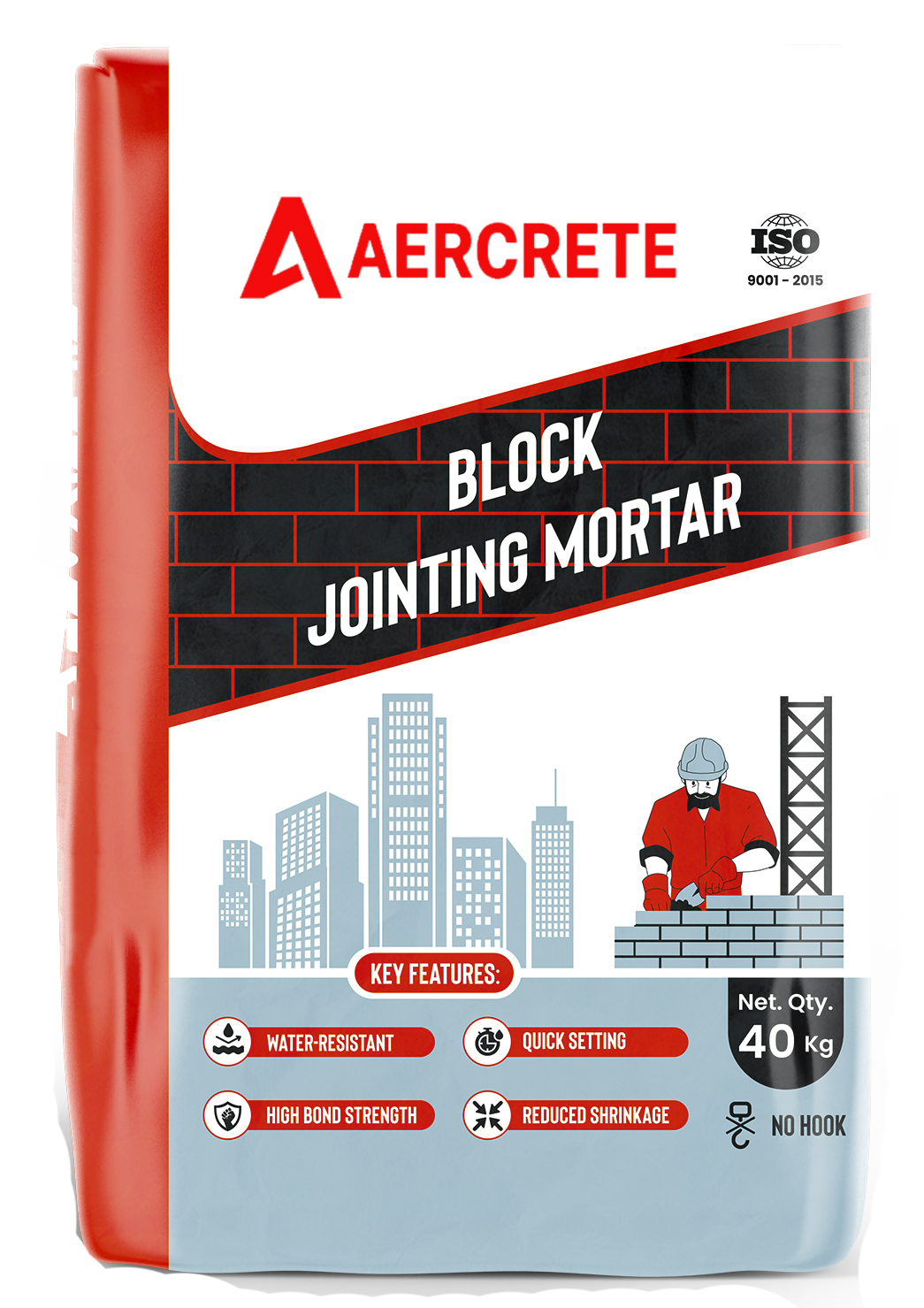
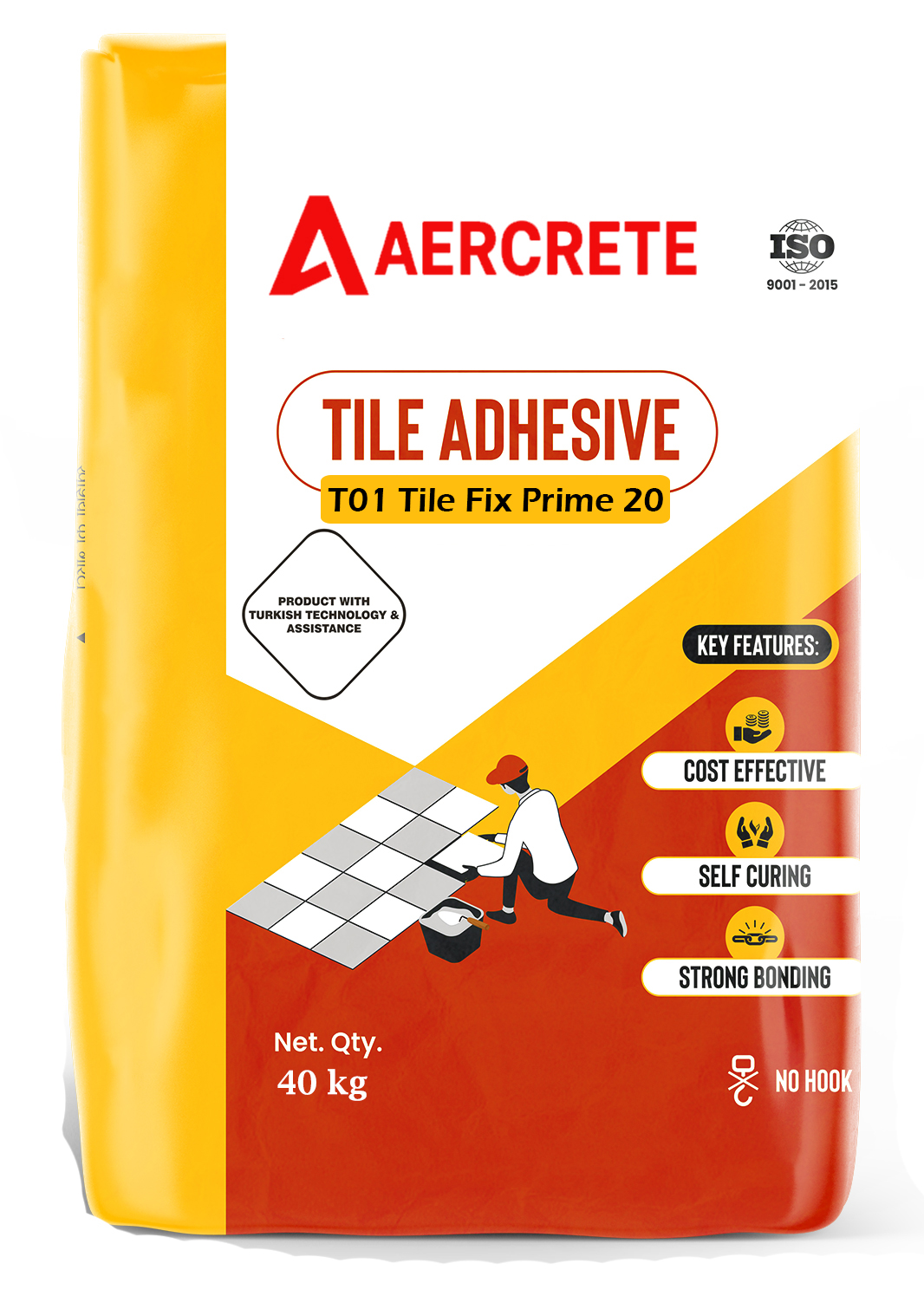
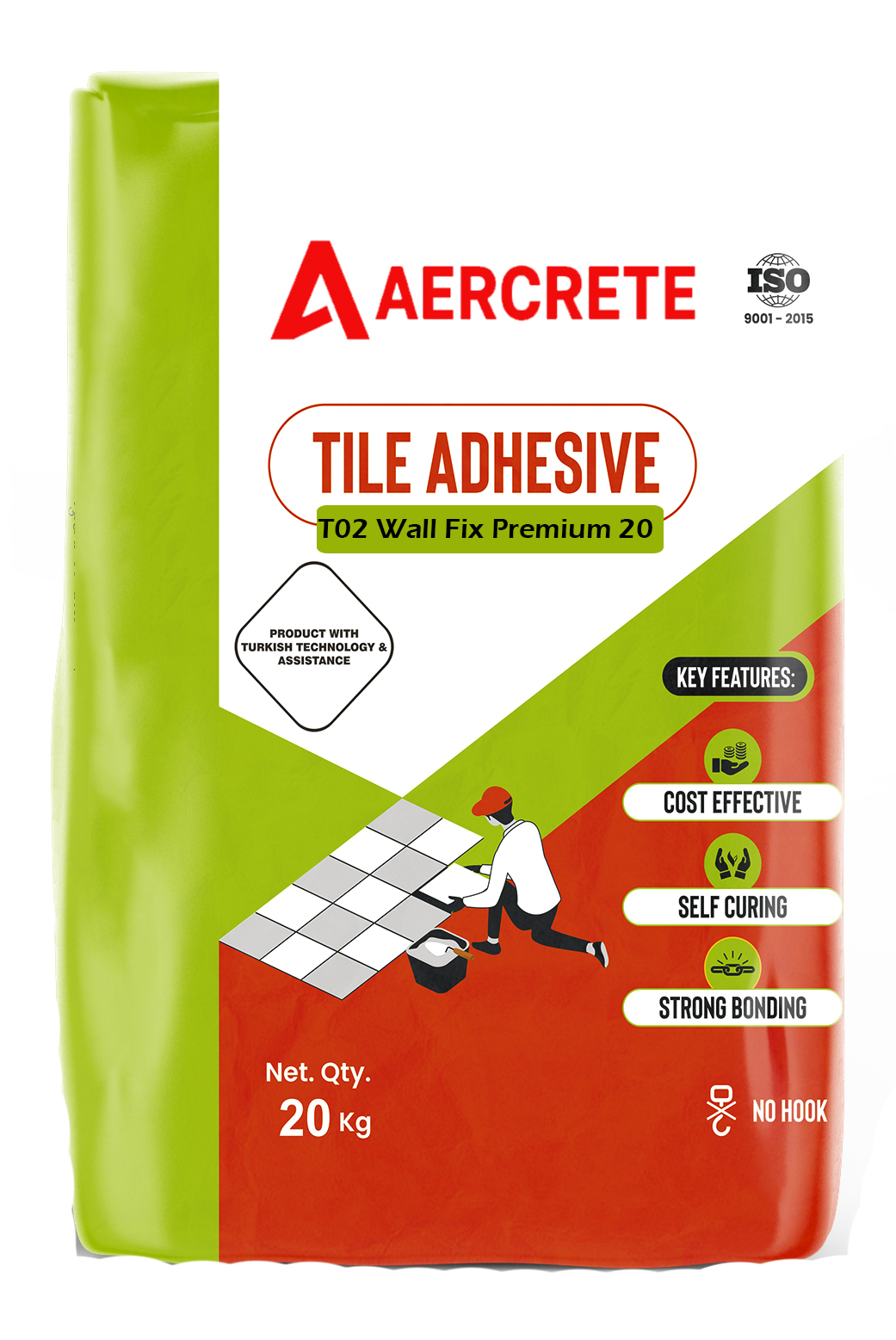
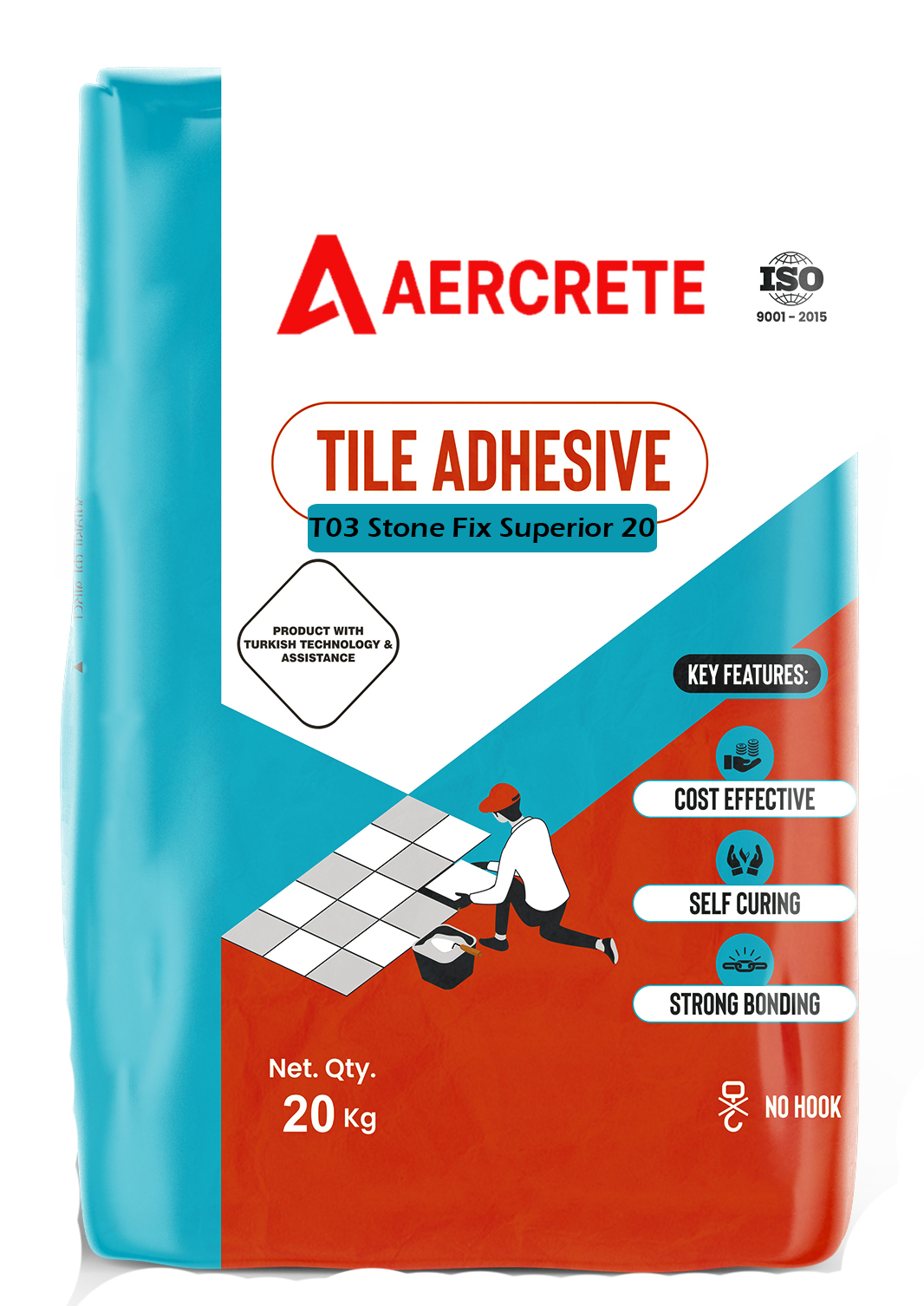
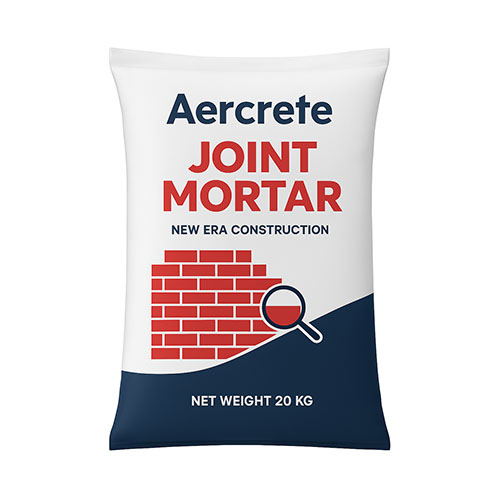
Aercrete Joint Mortar is a high-quality, factory-mixed thin jointing mortar specially designed for AAC blocks, fly ash bricks, concrete blocks, and other masonry units. It provides superior bonding strength, faster application, and long-lasting durability compared to conventional cement-sand mortar.
| Parameter | Specification |
|---|---|
| Appearance | Grey powder |
| Binder Type | Polymer-modified cementitious material |
| Grain Size | Maximum 0.5 mm |
| Mixing Ratio | 3:1 (3 parts mortar to 1 part water by volume) |
| Application Thickness | 3-5 mm |
| Pot Life | 2 hours at 27°C |
| Open Time | 10-15 minutes |
| Compressive Strength | ≥15 MPa (28 days) |
| Tensile Adhesion Strength | ≥0.8 MPa (28 days) |
| Coverage | ~1.4 kg/m² per mm thickness |
| Self Life | 6 months (when stored in a dry place) |

Aercrete Joint Mortar is a pre-mixed dry powder that only requires water for preparation. Simply add the right amount of water, mix, and it’s ready to use. This eliminates the need for sand and other materials, saving time and reducing on-site requirements.

The polymer-modified formula ensures a strong bond between blocks, gripping firmly to porous AAC surfaces. This provides long-lasting stability even under harsh weather or seismic activity, with joints stronger than the blocks themselves.

Aercrete Joint Mortar is designed for thin layers of 3–5 mm. This reduces material usage while forming stronger joints compared to traditional thick mortar. Thin joints also help maintain the thermal benefits of AAC blocks, minimizing heat bridges and enhancing insulation.
The mortar sets quickly, allowing faster block placement and reducing waiting times between layers. This speeds up construction and reduces labor costs, keeping projects on schedule with minimal delays.
Aercrete Joint Mortar has water-resistant properties, protecting walls from moisture, rain, and humidity. It creates a barrier against water seepage, keeping interiors dry and comfortable.

Despite its premium quality, Aercrete Joint Mortar is economical, using up to 70% less material than traditional mortar. Faster application, reduced material use, and lower labor costs make it a budget-friendly choice for construction projects.